Showing posts with label Theory. Show all posts

Monday, August 5, 2024

In which we earn XP


Haven't rambled about this in a LONG while (if ever) and I feel bad there's been nothing here for a while AND I've seen a few discussions on the topic on the webs so I thought I'd ramble.  CavegirlPoems started me thinking over on Tumblr.  They do a nice job breaking down how a handful of games award XP and what that means for the game.  Early D&D was simple.  1 GP of treasure = 1 XP.  Delve.  Carry it out.  Improve.  Repeat.  Simple, but nailed it.  Encumbrance mattered, as did depth of penetration.  YOU THERE IN THE BACK!  STOP GIGGLING!  Vampire The Masquerade rewards you for being the kind of player the game wanted. AS CgP observes "It was the 90s, they were still working out how to be a narrative-driven game, but you can see where they were going with it."  Monsterhearts.  XP for engaging with a mechanic.  I need more study.  And finally they look at 5e.  There are two systems at play here.  First is combat.  Violence gets you XP.  Hence: Murder hobos.  Second is milestone.  You level up when the GM feels like it.  And the game becomes James Wood finding Peter's candy.  You're "rewarded for following the railroad and reaching pre-planned plot moments in a pre-scripted story. You either have no agency in the matter, or are rewarded for subsuming your agency to the will of the GM. (This pattern continues with inspiration rewards, which are given 'when the GM is entertained by you'.)"

Neither of those is satisfactory which is why we don't use them.  We use the now seven year old Unearthed Arcana Three Pillar Rule.  Pillar I:  Exploration.  1 XP for every new 20 mile hex you travel through on a road or trail.  5 XP through the wilderness.  And additional XP (10 - 40) for exploring important locations, whether tied to the "storyline" or not and for finding "big ticket" magic items.  Pillar II: Combat.  Based on CR of the opponent and level of the character.  Awarded for killing, defeating and occasionally bypassing a creature or group of creatures, or a trap or problematic encounter.  Pillar III: Social interactions.  Awarded for positive interaction with influential NPCs.  The Mayor of that small village that you schmoozed when you were 9th level?  5 XP.  Positively influencing an NPC with cosmic reach?  20 XP or more.  

So does this produce the game I want?  After every session I send an email detailing the XP's earned.  The party KNOWS that traveling from A to B along a trade rout for the first time will be worth 6 XP but nothing after that as they run back and forth.  Cut a new 4-hex path through the wilderness?  20 XP.  Decide to check out that haunted cemetery on the way to the Wizards Tower?  Maybe 10 XP.  Maybe nothing.  Maybe it's a training ground for the BBG Evil Necromancer's mooks which might have a major impact on the storyline in coming months and worth 20 XP or more.  And they've learned to talk to people.  Find out who's in charge (or at least authoritative) and chat them up.  

And that's kinda the game I want.  Look under the rocks.  Smell the flowers.  Slay the evil beasties.  Thoughts?

Thursday, July 18, 2024

In which we peek behind the screen

Recently had a lengthy after-action discussion at our table about how initiative and combat timing works.  You can read the basics of our procedure here.  In response I wrote the following and figured since I WROTE it I may as well post it.

Khari kneels before an unopened chest, hoping to find something useful therein. Behind her about 15' back in an arc are Kirkas, Dakora, Castellan and Serynah. Turn's out the chest is a mimic. Mimic takes a grab at Khari, fails, and I call for initiative.

I then go around the table asking for your result. Kirkas 17, Dakora 11, Serynah 12, Khari 12 and Castellan 9. I enter these in the appropriate field on the combat sheet. The monster's initiative is already there. The dice roller and modifier were input when I “built” the encounter. The sheet is formatted to indicate who goes first, second and third. In THIS case Kirkas is first, Serynah is second and Khari is third.

Kirkas tell's me he going to attack with his bow. He rolls 2d20 to determine if he hits, then rolls to determine damage done. I update the mimics HP according AND note that Kirkas has spent 1 AP AND note that the thing Kirkas did (fire his bow) takes 8 tics. Since he STARTED on 17 the spreadsheet then indicates that Kirkas will go again at 9.

Next up is Serynah. She opts for a 3rd level sleep spell. She rolls a d20 to see if she successfully casts the spell. She'll need to roll 10 or better (10+spell level-charisma modifier.) She's successful but a Mimic has an average of 58 HP. Even if she rolled all 8's she'd only score a 56 and be unable to Sleep the Mimic, so no joy. I note that she has spent TWO AP (to cast a leveled spell) and that it took 3 tics (one per level.) Since she started on 12 she will next go on 9.

Khari is up next at 12, followed now by Dakora (11), Kirkas (9), Sareynah (9), and Castellan (9.) Khari opts to use her wild shape. This uses all three AP and takes the rest of this turn so she's done.

Dakora opts for Witch Bolt. She successfully casts the spell and the arc of energy connects to the mimic. Since she cast it at 4th level she'll do 4d12 damage this turn and 1d12 for every turn hereafter so long as she concentrates and takes no further actions. Casting the spell costs her 2 AP and 4 tics. She'll be up again at 7.

Kirkas decides his archery isn't strong enough so he swaps out his bow for Swiftstrike. That's an action and takes a tic. He has 1 AP left and will be back up at 8.

Serynah is up next and has only one AP left. Move? Probably not. Fire bolt. No need to check success as cantrips are always successful. She DOES need to hit on a ranged attack. BOOM! She hits. And now that she's 5th level it does 2d10 damage. But her AP are spent so she's done.

Castellan finally gets to step up. So to speak.. He summons Selune's Strike which takes one tick but costs no AP, but he has to wait for the next tic. As the cantrip takes effect Kirkas gets to go again.

But wait! Oh no! The mimic is ALSO in at 9. That wicked tongue lashes out at the now-wildshaped Khari. It hits, does 7 points of damage. Khari gets to try to avoid the grapple with STR vs DC 13. Let's say she doesn't. The mimic only has one attack so IT'S done but it'll be biting down NEXT turn.

Kirkas and Castellan go again at 8. Kirkas casts Hunters Mark (0 AP) for 1 tic, moving to 7. Castellan realizes he probably should have cast Moonbeam so he does it NOW … spending 2 AP. He succeeds at casting it, the mimic fails it's ST at disadvantage and begins to morph back into its gloppy shape. It takes radiant damage from the beam. Kirkas now has to move to get close enough to swing, using his final AP.

Dakora maintains her concentration hoping to finish the beast next round. And unless I've missed something above thus endeth the round. Six seconds. Roll again? Doubtful. I'd likely allow Dakora's Bolt and Castellan's Beam to finish the beast without playing it out.

The initial guideline for the whole shebang was Greyhawk Initiative. And I've used Tao for guidance. And a handful of other content creators. I keep tinkering with this table to make it better. Latest iteration (NOT used above – will use next session.)

Most stuff: 1

Move, per 10': 1

Spell: 1 per level

Grapple, Potion, poison: 5

Find something: 1d8+2

But the problem is weapons. How long should it take to use them? OLD system was 2 for light/finesse. 4 for versatile, 6 for heavy, 8 for bows and 10 for crossbows.

So I'm gonna try this next time: Light/finesse 1. Heavy/2-handed 3. And I'm still trying to come up with SOMETHING that makes sense for archery. Optimum real world rate of speed I've found was 12 arrows per minute which implies only 1.2 per melee round. By "rule" Kirkas could fire up to six. I need to do more research and do NOT wanna penalize Kirkas.

And after sleeping on this the long term solution becomes clear: ranged weapon attacks require 2 AP.  Suggestions welcome.

Sunday, May 19, 2024

In which we are no longer playing D&D


 I MAY have discussed this a year or so ago.  When does D&D stop being D&D?  The example used in this video is that of the conundrum of the Ship of Theseus.  I discussed this with some local DM's a while back and the general theory was "if you can still use your 5e character sheet you're still playing D&D."  And Mike Shea aka Sly Flourish also addressed this earlier this month.  Shea argues that the 5.1 System Reference Document changed what 5e "is."  He argues "the term "5e" no longer means "the 5th edition of D&D" but now acts as a stand-alone term defining compatibility between thousands of 5e RPG products."  Edit to add: Just found THIS too, the major takeaway of which seems to be that everything is now about combat.  Encumbrance, water, rations, and ammunition are afterthoughts.  Bags of Holding and Leomund's Hut are mainstays.  And the DM is no longer a rules arbiter.  They're a  story teller. 

Further, an "online friend DM" recently had his long time game fall apart due to, among other things, a 5e dispute.  He's NOT running 5e.  He's NEVER run 5e.  Everybody at his table KNOWS he's not running 5e.  If anything he's running AD&D with some sweet, sweet homebrew set in an early 17th Century planet earth.  But he had a 5e player tell HIM how a spell worked.  He's modified a lot of spells (or is still using the AD&D version) and the players KNOW how they work.  But 5e with its "rule of cool." "yes, and" philosophy and storytelling not game playing ideology doesn't fit with that.  So there was an eruption and what had been built over almost a decade was gone in an instant.  

Because he wasn't playing 5e (?)  He wasn't even sailing a ship of Theseus.  Which doesn't matter.  But it does.  HAD he been playing 5e RAW this problem STILL would have arisen because the player STILL thought she could tell the DM how the spell worked.

I'm wandering a bit but IMHO it all ties together.  

I have three VERY different players at my table and the challenge is to offer the game I wanna offer, AND the one EACH of them wants to play.  D played AD&D but kinda missed the intervening versions.  Her PC's are detailed, innovative and push the systems in place.  J played some of those other editions and still bears some of the scars.  For him it's a board game with more options.  The difference between characters is the difference between the battleship and the race car.  He wants puzzles and mysteries to be resolved asap and if they aren't he loses interest.  And then there's C.  Never played before so no preconceptions.  Very analytical.  Every combat encounter is a problem to be solved.  Every social encounter is an opportunity to be milked for information.  Every hex/point crawl is an opportunity to peek behind the curtain.  

Me?  I'm a systems guy.  I HATE running published setting because IMHO I just CAN'T know enough about them to do them right.  And there's so many things that 5e either does poorly or doesn't do at all that my approach has been "Spanning the globe to bring you the constant variety of D&D... the thrill of victory... and the agony of defeat... the human drama of TTRPG.  I've messed with spell components, insanity, initiative, the action economy, and encumbrance.  And that's just the player facing stuff!  

But is it D&D?  There was recently a discussion about me running a game the the MS where I teach.  The plan fell through but it's what got me thinking.  IF one of my young players had played 5e they were gonna be flummoxed by a lot of my homebrew.  IF one of my young players went to another game they were gonna be flummoxed!  But would the character sheet still be "transferable?"  Probably.  But just because the sheet can be dropped into a game doesn't mean it's the same game.  Which is why I prefer players who play their character, NOT the sheet.  D above is such a player.  J plays the sheet.  And C is a combination of the two.  

So I'm playing Velveeta.  A processed cheese food product.  It's a lot like cheddar.  Or American flat cheese.  But it's better.  Because it makes what we're cooking better.  So when we add more players we'll be open with them and tell them we're playing a 5e D&D-like product.


Wednesday, April 10, 2024

In which we un-randomize random encounters


 at least during "travel."

Here's how we've BEEN playing it:  drawing from Uncharted Journeys and a few other sources all cobbled together I have the players roll a d20 and a d6.  The d20 determines the encounter and the d6 determines when it happens.  

There are roughly a dozen TYPES of RE during travel.  Rest related.  Food related.  Bumps in the road.  Caravans.  Travelers in trouble.  Bandits.  Monsters.  A few others.  And what I've BEEN doing is ...winging it.  But you can only have so many muddy sink holes, last adventurers and greedy bandits.  

UJ uses a very mechanic heavy approach.  Party members assume "rolls" on the trip.  Depending on the type of encounter a given roll makes a skill check that then determines how the party rolls to respond to the encounter.  Party rolls.  Results applied.  Move on down the road.  Game-able n stuff but not terribly "satisfying" during the session.   I've tried prepping a 4e style skill challenge but those are difficult to spin out spur of the moment.  So I need to come up with something "different."  After 50 years of a game there just ISN'T much different.

One of my players suggested "give us two minutes to come up with a solution and THEN adjudicate it."  Which is nice for player buy-in and participation.  So here's what I'm going to do this week.  As part of my prep I'm going to design THREE RE's for each general type (thus putting a dagger in the heart of the "random" part.)  I'll incorporate the UJ method and layer in some 4e skill challenge stuff.  It'll be more detailed and granular than it needs to be BUT - it's what my table has asked for and once the initial chart is designed I'll only need to replace those that are used.  Some weeks there will be NONE!  

More lonely fun.


Friday, March 15, 2024

In which we revisit the Quantum Ogre.

 My attempted wanderings into the "open game" world has been, to say the least, wonderful and


productive.  I currently have a big story arc (which was NOT there at the outset) that the players asked for.  I have a secondary arc that loosely ties into the big arc to provide an occasional diversion.  And EVERY session provides the opportunity to drop plot hooks which may or may not tie in to either of those arcs.  

Short digression.  About a year ago the party had completed a long commute.  Two sessions of travel along a major trade route.  Four random encounter checks every day.  Natural disasters.  Medical emergencies.  Goblins.  And dozens of caravan wagons.  At the conclusion of the trip one of the PC's observed "it was kinda fun I guess but there were no plot hooks."  Another member of the party pointed out "we walked by dozens of people every day.  Every ONE of them likely had a plot hook of some type.  I didn't pursue them because I wanted to get here but there was no reason for you NOT to."  And that was the end of the discussion.  

 Justin Alexander has popularized the concept of the Three Clue Rule.  Essentially you make a rule available three different ways (or places) to ensure that it's found.  No one refers to them as Quantum Clues.  But aren't they?  Then there's Schrodinger's Troglodyte.  Before the players interact with the adventure everything planned by the DM is not fixed. It is only after the players interact with the adventure does anything become real and so fixed.

So, if the players explored 15 rooms of a 20-room dungeon, skipped the boss troglodyte room, leave and never return, then for now, only those 15 rooms are real. Dare I suggest that only the things the PCs interacted in those 15 rooms are the Chekhov’s Guns (from the story POV) and everything else including the boss troglodyte might as well not exits (from the story POV). At best those things the PCs missed exist in a Schrödinger’s Cat-like state of not quite existing.

And so it is with plot hooks.  If one applies the TCR only to those clues needed to advance the story then all other facets of DM prep are Schrodinger's Troglodyte.  Let's say I prep three potential encounters for my party:  placating a green dragon, fetching some phase spider spindles and guarding a grove from a cyclops and his buddies.  In keeping with the TCR I have multiple ways to set the hook.  Weavers.  Crazy old hermits.  Local lords.  Caravans.    If I plant one and they take it so be it.  They need to be couched as maybes and possibilities.  If they ignore it I can pocket it, file it away and throw it in front of them again in a month.  Because they're in Schrodinger's box with his cat and his troglodyte, both real and unreal.

So while the general view of the Quantum Ogre is that it's a bad thing, robbing players of their agency, I'm thinking Schrodinger's Troglodyte is a GOOD thing because it renders the players agency irrelevant while maintaining it?  That's CAN'T be right, but it SEEMS right.  Ideas?


https://dmsescritoire.blogspot.com/2021/08/in-which-we-attempt-to-slay-quantum-ogre.html

Wednesday, January 17, 2024

In which we learn a new word.

 Diegesis.  di-e-ge-sis.  [ˌdīəˈjēsis].  a narrative or plot, typically in a movie.  But more importantly it's


what happens IN the movie.  In Pulp Fiction there's a dance contest scene set to Chuck Berry's "You Never Can Tell."  That song/music is diegetic to the movie.  "Out of Limits" is played near the end of the film as Butch rides off with his girlfriend.  It is pure soundtrack.  NOT diegetic.

So what does this have to do with D&D?  As Prismatic Wasteland put it in their post back in '21 "Your

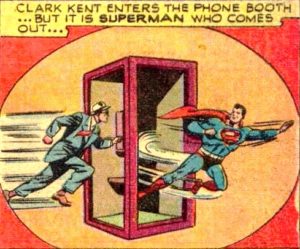
character’s broken leg is a diegetic injury, but losing their hit points is not."  I've always been a fan of diagetic character growth as opposed to non-diegetic.  Non-diegetic, to tie in to a post I made last week, is like Clark Kent dashing into a nearby phone booth and then bursting out as Superman.  Characters go into a battle at second level, kill a kobold or two and emerge as third level.  More hit points.  More spells.  More abilities.  I've always HATED that.  Imagine going to high school, sitting in classes for four year, but not acquiring any knowledge or skills until the end when they hand you a rolled up piece of paper.  Makes no sense.  

So what's the solution?  My return to the game has allowed me to read a crap-ton and keep my eye out for potential solutions.  Some are simply procedural.  I've become more aware of my spell-casters needs and manage to seen spells, books and scrolls in advance of  a PC being able to use them.  In our last session I knew that three PC's were QUITE close to getting the XPs they'd need to go from 1st to 2nd.  So I kept one eye on the XPs they earned and when they crossed the threshold, in media res, their class features manifested.  The Twilight Cleric was bathed in twilight and those around him felt relief, their fear was allayed and some gained hp.  The Circle of Spores Druid manifested her Halo of Spores and inflicted necrotic damage on her opponent.  Made for a nice cinematic moment.  All at the table loved it.  And they'll get the rest of the rights and appurtenances thereto between sessions. But still only a very small band-aid on a much larger "problem."  I do have two potential fixes, however.

Regular readers know I've abandoned feats and instead use the Smolensk Sage System.  When a PC advances a level there are rolls for each area of study to see what, if any, knowledge is obtained.  And it's all applied at once.  A player might acquire a handful of new skills all at once.  Or nothing.  So I'm going to try a little play test this next level.  I'll do all the rolls in advance, note the result and total the outcome.  Then as players advance toward the next level after each session I'll allocate the points randomly.  So instead of dashing into the phone booth after a successful interaction with the head of the cartographer's guild the abilities can be acquired a little at a time and introduced between sessions.  That way every XP counts, not just the last one.  You never know when some new skill/feat is going to fall into your lap so long as you are progressing.  

And the OTHER mechanic I recently stumbled on, via the above-linked post, is that of Ability Score improvements.  RAW you go adventuring and when you wake up at 4th level you're suddenly better at two of the six things you can do.  Whether you've used it or not.  Makes no sense.    I've been playing Sid Meyer's Civilization since Civ 1.  Unit's get promotion but you decide what they are.  Scouts are the first unit's you get.  When promoted they can get either a movement bonus through forests or over rough terrain.  In other words you can spend every turn marching over hilly rough terrain earning exploration XP but when you get your promotion you can improve your forest movement.  Makes no sense.  

So let's steal a mechanic from Freebooters on the Frontier (2.)  Any time the player tries to do something using one of the six abilities and fails they get a tic.  Five tics and they increase the AS by 1.  OK.  Not EVERY time.  A nat 1 is a critical failure and nothing good come from that.  But a 2?  That earns a tic.  Same for failure by 1 (? not sure about this.)  I'll play test and see what happens.  Fighting, casting and skill uses all count.  There's a 10% chance of getting a tic so the fifth tick should come after roughly fifty tries.  Assume a fighter.  Most of our combats are successfully resolved in 3-5 rounds.  So 10-15 combats.  RAW bumps the AS every four levels.  That would break down to 3-4 combats per level.  Spellcasters likely have fewer chances but should have more opportunities using other skills.  And this way there's no dashing into the phone booth.  There's merely a nice step of progress for using your abilities - the high AND the low.  

Would love to hear thoughts and input.  And I'm wondering: do I tell the players or just let them find out as they get the boost?


Wednesday, December 27, 2023

In which we discover we're all SUPERHEROES!

     Two weeks ago we completed the "Omelas" quest.  Ending was a little mushy but it hit the players in

Why yes we ARE 1st Level.  Why do you ask?
that sweet spot of not liking, not disliking, discomfort.  An hour of discussion and table talk after the conclusion, which I think is a GOOD thing.  And it'll definitely impact their procedures in the future.  

    Next up was a two location adventure.  The henchlings party has been tasked with liberating a remote keep and then holding it for seven days until a relief column can arrive.  The A team will be leading the column.  This fulfills several goals.  The new kids get to learn to function as a team and earn some XP in a balanced setting.  The A team gets to earn some points for exploring, the players get to keep them involved, and they'll earn a few things to boost their inventory.  

    Sadly our post-Christmas session was cancelled.  As always the GOOD news is that I'm already prepped for NEXT week.  So here's what I'm doing:  I've put together a short (four page) Player's Handbook for my game setting out the (player facing) home brews we use.   Also made a spreadsheet workbook for tracking some stuff that I just am not happy with on almost every character sheet I've ever seen.  Our magic and encumbrance system are the main two.  We'll see how it works at the table soon enough.  Still wanna change up my music usage but I just can't get there.  Next step is to do a DM's Guide for a lot of my mechanics so rather than scurrying around for half a dozen different things as I need them at the table I can have them in one spot.  

    Now, let's talk about the title of this post.  Last session we introduced three new PC's: a half-orc wizard, a human Circle of Spores Druid and a halfling Twilight Cleric.  First level characters.  Had trouble climbing trees and jumping.  And then combat was joined.  The TC started slinging Toll the Dead from range, killing one opponent every round.  The wizards did the same with Fire Bolt.  Druid used healing word but was otherwise a staff swinging whirlwind.  Roughly 1/3 of the bandits holding the keep were slaughtered almost silently at night.  Once they figured out what was going on they stopped charging to their deaths so prying the remainder out of the shell will be tougher.  But the ability of two first level non-martial characters to dispatch over half a dozen bandits with relative ease?  They're all super heroes now.

    Recently blogger Taskerland, in the midst of an exploration of the use of random tables and philosophy did a nice little historical backtrack.  "...D&D had abandoned many of the practices that had emerged in the early years of the hobby and replaced them with a tendency towards writing that was horrible proscriptive in an effort to be a) idiot-proof and b) more epic in scope."

To make matters worse, support for the game aimed at players encouraged the creation of ever-more powerful PCs with ever-more elaborate powers. Meanwhile, support for the game aimed at GMs described these densely-layered and intensely rule-bound social worlds where the PCs spent their entire time being ordered about and manipulated.

    Character creation became a major part of the game.  When I was trying to put my table together I had several people tell me they'd played D&D and it consisted of two hour sitting around a table creating a character.  Not fun.  A Distant Chime touched on this recently as well.  

        Partly as an edition thing (with the increased focus on character-building as an aspect of gameplay), partly as a community thing (with the rise of character-optimization communities, especially on online forums), partly as a business thing (make sure everyone is playing with the published rules, in the published settings, using published adventures, so that they buy our books) the experience of the game for many players has shifted away from the experience of playing at a given table, characterized by a particular DM and players with their own faults and foibles and opinions and houserules, and towards the partly-imagined experience of playing a sort of platonic ideal D&D, where the rules always work as intended and the setting is exactly as published and the game is a regular progression of CR-appropriate combats atop masterful battlemaps. 

    Our friends over at Tao of D&D have written about this as well.  It saddens me.  The progressions seems to be pig farmer -> mage capable of killing people with the wiggle of a finger -> Master of the Universe.  The middle ground doesn't seem to have much to differentiate it.  The gravy might be a bit thicker, the meat a bit better seasoned, but it's still all a fine feast.  No scrambling after scraps, wondering where the next potato might be coming from or whether you might be able to snatch that rutabaga to make it to tomorrow.  

    Not sure where this is/was going but I felt the need to splooge it out.


Friday, October 13, 2023

In which we partake of Funnel Cakes!

Things I dig: DCC Funnels — Maitreyi Plays Games 

Party is about to be all 5th level at which point they have some options.  They may retire the character completely (making them a major NPC in the area, settling down and still giving the character some limited involvement,) kill them off completely, or roll another character to be a follower (and a fallback if the more advanced character dies.)  Been running a version of this the last few years and the party seems to enjoy it.  They even started talking about it when they hit 4th, knowing it was around the corner.

In the past we simply rolled the character up as usual and introduced them via story lines and plot hooks.  Gonna try something different this time, with full buy-in from the party.  A funnel, as popularized (?) by the good folks at Goodman Games who gave us Dungeon Crawl Classics, with some additional bells and whistles.  I've spent the last few days reading available professional products and trying my hand at developing one or two.  Still not sure which I'll use but it's gotta be GOOD because I want it to be a hit.  

Going to use HanClinto's generator to crank out 25 or so PCs.  I'll have 3-4 players and am thinking 4-5 PC's per.  Should have a few left over to fill in as needed.  Looking fwd to my players getting creative with the limited inventory provided.  Also using an optional rule from Ten Red Crows to allow PC's with INT or WIS of 15 or greater to gain the ability to cast the Uninitiated Magic cantrip.  Because the characters are at level 0, the spell attack modifier will be only the ability score modifier to which the
magic is tied: no proficiency bonus is allowed.  They can create a small glowing bolt of energy and hurl it at their enemies. Make a ranged spell attack. On a hit they'll do 1d4 force damage.

AFTER the funnel the player will take one of their survivors and promote them to a Level 1 character.  They'll roll 1d6 for each ability and increase that ability by either 1 (1-3) or 2 (4-6.)  Skills, proficiencies, languages and equipment will be determined similar to our initial character build.  Giving serious consideration to using these tables to see what happens.  Since I'll be doing this away from table I can probably experiment to see which give us what I think is the best build.  Hopefully the players will rely on the funnel to lean into their backstories.

As an aside I have an interesting plan for introducing the noobs to the party.  I'll post if it works.

Saturday, September 9, 2023

In Which We Munch on Crunch

 Recently started reading the posts from A Knight at the Opera.  They've had a couple pretty good posts on crunch lately.  Well, not lately.  This one was back in 2021And this one last month.  Both of reasonable length but both good treatments of the topic.  

Y'all know I likes me some crunch.  But I like crunch for a reason.  And I like crunch on MY side of the screen.  Player facing crunch adds to the cognitive load and detracts from overall game play.  So if I add a bit of crunch for the players it's gotta be worth the walk.*  If I can add it to MY work load and it improves the game then I'm usually not even gonna question it.  Players don't usually even hafta know it's there!

And so it is with my newest concoction.  A year or so ago I experimented with The Angry GM's Tension Pool.  It worked OK but we weren't spending enough time crawling for it to matter so it slipped silently into thecloud of good intentions.  Then last month I discovered The Underclock.  And THIS I will implement.  Started last week.  As the party entered the dungeon I meticulously placed a d20 on the map with the "20" facing up.  All action ceased.  Dakora gave me the side-eye and said, quietly, "I hate it when you do stuff like that."  They got it down to 14 before the end of the session.  We'll see how Tuesday night goes.  Don't think I like it for overland travel, nor for urban exploring but it has definitely seemed to sharpen up their attention underground.

Pile this on top of my insanity rules,  spell slot rules and focus vs component rules and the crunch is all easy on the players but adds to the gameplay and decision making.  Do I risk madness to get this spell off?  Do I upcast a spell at the risk of losing it for 24 hours or more?  Do we keep making progress or fall back to that nice spot on the trail that offered the promise of a long rest (which is quite a commodity in our game.)  Cheese that CRunch!

Side story from last session.  Party is trying to elicit help from a local noble.  Their selling point was "we like to travel village to village doing good deeds."  The Lady inquired "what was your last one?"  What followed was about two minutes of backtracking through previous of adventures, NONE of which really involved "good deeds."

*Lengthy aside.  Back when I worked as a summer camp counselor I was usually in charge of our "special programing": opening and closing ceremonies, vespers, flag raising and lowering.  That kind of thing.  I enjoyed finding alternative sights for these.  And our campers usually appreciated the variety IF it made sense.  Had an aide once recommend using a sight that was a 15 minute walk from our home base.  For a five minute ceremony.  I nixed it and said the location had to be "worth the walk."  It had to be worth the half hour of evening rec time the campers would be giving up to get there.  And after that "making it worth the walk" became sort of our mantra.

Tuesday, July 4, 2023

In which we examine "The Promise."

Back in late May the Spriggan's Den wrote a very nice post entitled Making RPGs live up to their promise.  I let it simmer more a month and while I don't have a lot to add to the good parts I thought I'd make a somewhat responsive post to address some of the points raised.

The author begins by observing that 

"When anyone first tells new people about roleplaying games and what makes them such a cool activity, it’s nearly always about how you can play characters who are free to do anything and go anywhere, and how your choices create a unique story as the GM has the NPCs and the world react naturally and logically to whatever you can come up with. This is the promise that RPGs make to players, and I think that we all should expect these from any campaigns we play and don’t accept any campaign that doesn’t. Because what’s the point of all of it then anyway??

 So there's the premise (or rather, promise) of the article.  Why is this so often NOT so.  And can we MAKE it so?

 The author's next point was that there was a lot of "do not do these things" advice and it GREATLY outweighs the "do these things" advice.  Boy howdy.  Because the "dndtt" advice applies to virtually ALL tables while the "dtt" advice can be VERY table specific.  The last few months I've started spending WAY to much time on YouTube WATCHING this advice.  There are content creators I NEVER have to watch again.  There are others that I rewatch on the reg.  And there are some that I wonder "what the hell are they even doing on the inter-webs?"  They seems to be clowns, playing D&D.  And their game is terrible.  But for THEM?  They love it. And I'm sure their viewers do.  But if 95% of the DM's out there are watching it there is a serious Cargo Cult problem.

We then proceed to a series of premises.

#1.  The player  characters are the protagonists.  Well .... yes.  But as the author observes in published adventures the PC's are essentially henchmen, helping the king save his kingdom or the princess or whatever they're supposed to be saving.  And who wants to play a henchman? 

#2.  The players decide what the characters do.  But in most railroad games the players DO decide what to do but it's a decision without a difference.  The decision's players are given aren't driving the story.  They're deciding whether take the high road to the demon's cave or the low road.  Again: a problem with most published adventures.  

#3.  Players decide where the players go.  Short answer: so long as it's in the 24 pages of the published adventure.  And the author recognizes that as well.  Riding off into the night abandoning the demon-plagued village to its own devices MUST be an option.

#4 Players decide who they side with or against.  Don't like the quest giver?  Awesome.  Go join the other side!  As the DM - present the world.  Let it unfold.  And let the players decide which side of the fold they take.

#5.  The players decide which causes to pick up.  I've been through this recently in my game.  The party decided to let the wood elf war refugees fend for themselves and to let the blighted forest spread unabated.  They're headed west to The Crossroads to see what else is "out there."  And "out there" there's a whole social structure with people and groups who have a wide range of goals and drives.  And this was AFTER they took a stab at setting up a protection racket.  

#6.  They player characters are the champions of their cause.  See #1 above.  

#7.  The Antagonists of the Story are within the PC's means to challenge.  As the author observes, think Seven Samurai.  

It’s set in a world of constant civil wars with raiding armies and roaming bandits destroying and plundering all the villages they come across. There is a tale happening somewhere in that world about one warlord rising to the top, defeating and subjugating all the other warlords, and establishing a strong state that cracks down on the bandit problem. But The Seven Samurai is not that story. The heroes of that story do not have fight and defeat all the warlords and their armies to be victorious. They are just seven samurai with no resources and there is no way for them to win the civil war for the control over all of Japan. But that is not their story. Their story is about destroying a gang of some 30 bandits raiding a single unprotected village. This is a threat that the seven samurai are perfectly able to deal with and win against. Great warlords and their armies exist in this world, but they are not the antagonists of the story.  

Not sure I'm as married to this one as the others but it DOES make for a great campaign.  And it doesn't always have to be about saving the world.  Sometimes it's just about beating the Urbania Cowboys.  

#8.  Failure is always an option.  Failure reinforces that each eventual success was NOT a given but rather was the result of their own hard work.  

#9.  False conclusions are the fault of the players.  Or SHOULD be, if the DM is doing their job.  

I also left a comment at Spriggan's.  We'll see what discussion ensues.
 

Friday, May 12, 2023

In which we go up a level

So I bent the rules a tad last session.  Second session with 1st level characters.  Party is coming together.  God role playing going on.  Fun n stuff. But one of the "pre-packaged" adventures I've given the hook for suggests leveling up to 2nd after completing "Chapter 1."  Party was about 80% of the way there so I DID bump them up.  They'll still have to EARN that last 20% so it might take them a tad longer to get to 3rd.  We'll see.

There's a rough rule of thumb that indicates you "should" go up every four sessions or so.  I've been using the Three Pillar XP from the old UA from 2017.  Basically points based on your tier, the CR of your opponents and the tier level of locations, item, social interactions.  100 XP to advance.  So that means 25 xp per session to meet the 4 sessions per level approach.  And then we're talking 8-10 xp in each pillar.  

The Social pillar grants 10 xp for a successful interaction with an NPC in your tier, +10 for every tier above yours, +5 for a tier BELOW yours, and 0 if more than a tier below.  Pretty easy for an involved party to interact positively and sway  SOMEONE in town with some pull.  Local lord.  Captain of the guard.  Guild head.  This one's harder in the wilderness but lieutenants and bandit leaders might present opportunities.  This gets tougher in tier 2 but we're still a month or so away from that.

The Exploration Pillar can present issues as well.  I always give 1 xp when a 20-mile hex is entered for the first time.  Visiting plot hook sites can usually get your 10 points for this one.  Current party got points for the lost abbey and for the demon tree.  Not likely to pick up any next session.  Unless you're always on the move and wrapping up plot hooks rapidly this one will be the "slow" one.  Magic can be used to boost it if need be.  Finding a rare non-consumable magic item can do this at first tier, and I usually only give it to the party member who gets the item but it makes for a timely addition if the rest of the pillar is low.

Finally comes the "Combat" pillar - although "Encounter" pillar is a better label.  Overcoming an obstacle using skills and ingenuity warrants these points as well as besting critters.  For our four-character party as currently constituted that would mean two encounters of CR 2-4 or one of over CR 4.  It could also mean over a dozen encounters under CR 1.  Last week's owlbear was helpful but they needed some nagging blights and wolves to hit the number.  

What I NEED to start doing is paying attention to where the party IS and what they're planning on doing, in order to make sure I have sufficient points on offer.  The coming session should allow for plenty of encounter points.  Unless they surprise me there won't be many opportunities for social points.  And I've already give the 20-mile point and the important point points.  So to hit that sweet spot I'll need to include plenty of CR appropriate encounters and at least one magic item. 


Saturday, April 29, 2023

In which we look back ... and start again.

Ok, we all know what railroads are.  There's a LOT of argument about  sandboxes.  And some folks use the term "amusement park."  And they're all kind of mobile plot points on a graph and fine if you like that kinda thing.  I was HOPING to move beyond that but I keep missing the mark.  We started with the Masks of Destiny campaign and a bunch of little side trips that were fun, when needed, to bump the party up a level.  It was good.  We all had fun.  Until they all died.  

And then we started over.  I wanted it to be more of a "garden" type game, but I couldn't resist the urge to throw in a through-line with a campaign-closing BBG.  So I planted my garden and sowed a bunch of seeds of plotlines that were interconnected.  And they traipsed through the garden for a while.  Then wandered off for a while.  Then came back adn started making progress.  Then they all died.  

So now we're starting over again.  No more over-arching BBG.  Yet.  Tried using a world balance mechanic last game.  Nice touch but surely better mechanics have been developed in the last 40+ years.  So THIS time around I'm trying (more) new things.  Players wanted a little more political intrigue and I have a "mechanic" to handle that.  AND I'm going to try using Dungeon World Fronts more.  After a session I'll review existing fronts, move them forward (or not) and review the session to see if perhaps there's a new front coming.  Party can address the front or not and we'll where that leads.  Already have one front in place.  Two more in development.  As the folks at DW say: 

"Fronts are built outside of active play. They’re the solo fun that you get to have between games—rubbing your hands and cackling evilly to yourself as you craft the foes with which to challenge your PCs. You may tweak or adjust your fronts during play (who knows when inspiration will strike?) but the meat of them comes from preparation between sessions."

Looking fwd to where next Tuesday takes us.


Saturday, November 26, 2022

In which we finally get around to enumerating our House Rules

 Not our mechanics, mind you.  Don't want you to see EVERYTHING behind the curtain.  But I'll be adding a hint or two to this list every month or so.

  1. Starting characters roll 4d6 and choose the 3 highest dice for statistics. Players choose where to allocate the final six numbers. Further character stats are generated according to my own systems. Must have at least one 15 AND one 16 OR one 17.

    2) Classes are restricted. No monks or artificers. Some sublasses might also be discouraged. Ask during creation.

    3) Races available to players are restricted to dwarves, halflings, elves, half-elves, half-orcs and humans.

    4) No class/race restrictions

    5) Any race and any class may be multi-classed.

    6) There are no race/ability score minimums or maximums.

    7) There is no such thing as “alignment.” Paladins may be jerks if they wish.

    8)  Material components replaced with Spell Focus Homebrew

    9) Only trained fighter types (including paladins and rangers) may fight from horseback. Only fighter types may successfully ride warhorses while armed.

    10) Backstabbing and assassination may only be accomplished against surprised or stupefied creatures. Neither may be accomplished in combat against an opponent who is aware of the thief’s or assassin’s presence.

    11) Some spells have been rewritten and are periodically subject to review. Goodberry and Mend are two examples.*

    12) At present I use a money system in which a gold coin (weighing 4 grams or 1/6 of an ounce) is equal to 10 silver pieces. One silver piece = 10 copper coins. Typically 80 coins will fit into a small belt pouch and 300 into a large belt pouch.

    13) Long bows cause 1-8 damage. Short bows still cause 1-6 damage and may be used from horseback. Either may be fired every other round normally, but a -4 penalty may be accepted if a player wishes to fire a bow every round.

    14) Light crossbows cause 2-12 damage, but may be fired only once every 3 rounds. Heavy crossbows cause 4-14 damage, but may be fired only once every 4 rounds. These damage changes were made to give players a reason to pause when facing a group of town guardsmen.

    15) There is no difference between outdoor ranges and indoor ranges. One foot is one foot, always.

    16) Psionics do not exist.

    17) All players begin at first level, regardless of the present level of the party. Low level characters associated with high level party members who SURVIVE tend to go up levels very quickly.

    18) Experience points are awarded for using the UA Three Pillar System.

19) Initiative System Homebrew

20) Death & Dying Homebrew


Goodberry: invests ordinary berries with the power to restore lost hit points (1 per berry) or provide nourishment equal to one pound of food each, in persons who have no damage to heal. The berry always heals before it can nourish.


Mending:as written but may only cast once per long rest, plus once per level

Thursday, May 12, 2022

In which we ask "why?"

“Why?” should be the D&D version of “yes, and ….” It can move the action further and it can gt you to the place where you can say “yes, and.”

A few examples from recent play sessions.

Our half-orc barbarian asks, as they're preparing to leave town for an overland journey, “can I buy a bird?” The easy answer was “yes.” The town is big enough to support a stock yard. Heavily agrarian. At worst inquiries could be made and some opportunistic townie would go TRAP something for him. Why he didn't catch his own, or ask the party ranger to do so was beyond me, but so what? Table discussion then devolved into a discussion of Ogar owning a vulture. Or perhaps a falcon, but no sleeve. At THIS point I began imagining all manner of unintended consequences. So I asked why? He has several control/speak with animal spells and has been unable to use them. This would allow him to do that. So – a birdbrained scout. Not a familiar. Not a beast companion. Just extended scouting ability. So I said yes, but …. no birds of prey. A pidgeon. A dove. Maybe even a crow. I offered a chicken but was soundly rejected. And a duck or goose would be eaten too soon! But I already have PRICES for those three. He's flush with cash so that's not a problem. We agreed in principle to a non-stat-block bird (thus eliminating the temptation to use offensively) of yet-to be-determined provenance. Some quick research yielded the Red-billed Quelea. And everybody's happy.

The party has taken on a “Magnificent Seven” type task to protect a small village. Quite admirable. In prepping the defense the rogue asked to “walk the perimeter. Why? He explained his idea for locating the highest traffic means of ingress in order to narrow down what needed to be defensed AND to set up opportunities for enfilading fire. I could then provide him with the exact info he was looking for instead of waxing poetic about “the beautiful countryside lightly frosted with rime.” He didn't USE the enfilade opportunities, but that's beside the point. The question “why?” saved time and enabled the player to do what he wanted to do succinctly. Several other similar plans were attempted by other party members along the same track. Can I X? Is there any Y laying around? Why? Once I know why I can better answer the question and the players can actualize their plans. Everybody's happy.

Side note: Two new flavor mechanics got expanded this session. It's winter. Temps dropping. Party made sure to purchase winter clothes when the opportunity presented. Weather report is simply three words: one for precipitation, one for wind and one for temp based on the 10 degree range the wind chill presents (pleasant, cool, brisk, chilly, etc.) As conditions worsened the party realized their winter clothes wouldn't protect against ALL cold. A couple frosty nights threw the party into disadvantage. Staying close to the fire and within a windbreak were helpful but they know their movement is now limited by conditions.

Tuesday, April 12, 2022

In which we discover a LOT of scarcity


Scarcity creates conflict. Conflict creates adventure. And there you have it.


And so we're ready to implement NTME2022. A FEW things still need a tune up. Carpenter, Cartwright, Mason and Alchemist all need work. Kinda saving them until needed. When the party decides they need to buy a wagon, or build a fence, or an eye of newt I'll start fleshing those out, and the tools will be in place for that to happen. Distiller, Brewer, Furrier, Metalsmiths, Outfitter and “Inns and Taverns” all need some touch-up work to be done. Example? Since sugar is rare I haven't set up rums yet.


To catch up, the resources of my world are loosely based on reality. They're placed according to geology, climate, long & lat, altitude, etc. Many are dependent on other resources. About a month ago I placed all of my precious metals and stones. This weekend I set up my lapidary store based on size, rarity, location, etc. Which brings me to aquamarine. Emeralds are currently the most expensive stones. There are seven known sources in the world, based on the presence of tin and granite. Diamonds SHOULD probably be next, found only deep in dwarven mines and occasionally those of Orcs. But the second most valuable stone in MY world happens to be the lowly Aquamarine. Found where the geology has conspired to place but tin and copper. Which just so happens to be ONE place: the neutral berg of Baram, in the rough lands bordering on Dunnir, the land of the hill dwarfs. This town of 4,000 souls is cut off from most of the world. Pirates, sea monsters, brigands and the lawless wilderness make any journey there treacherous.


Stones occasionally make it out via the black market but let me give you some idea of value. An almond sized emerald would cost about 1 million gp here in Crysrift. A plum sized diamond would got for about 1.5 million gp. That same million would get you an almond-sized aquamarine – IF you could find one. There's a campaign story arc all on it's own. As currently constituted it would take over two DECADES to get there from Crysrift. Opening up the trade route ALONE might take years and earn millions.

Think anybody will?  Maybe.  Once they figure it out.

Thursday, August 26, 2021

In which we attempt to slay the Quantum Ogre


Or Heisenberg's Ogre.  Or Shoedinger's Ogre.  Whatever the kids are calling it these days. 

By whatever name, it seems to be an insidious beast – like Pellinore's questing beast or Antigonus' bear. And I'm unsure how much attention in should be given. Definitions seem to vary slightly. Giving the players a choice (two doors) but determining that the ogre will be behind whichever door they chose, seems to be the dominant definition. But how is this different from determining random/wandering encounters in advance?

I know that the party will have three random encounters as they move through the Edward Wood. I use a nice sufficiently random table and determine that these encounters will be a patch of razor vine, and abandoned farmstead, and an ogre. I have no idea what path they will take through the wood. I don't know how fast they'll be moving or what other silliness they might engage in. They might zip through the wood at breakneck speed, dispatch the razor vine with alacrity, ignore the abandoned farm completely and zip right by, encountering the ogre being relatively fresh as they exit the wood.

Or they might take their time dealing with the razor vine, analyzing possible solutions and discussing alternative solutions. They might even kill some time “beating the bushes” to see if other travelers might have dropped a coin or two. They might decide to rest and recuperate in the abandoned farm house searching it high and low for signs of habitation, usable detritus, or lingering beasties. I'll likely even GIVE them a swarm of rats or something, just to reward their inquisitiveness. And then, after 3-5 days of traipsing through the wood, they'll encounter an ogre.

Or perhaps the ogre will manifest while they're trying to solve the implacable riddle of the razor vine, or as they investigate the architectural integrity of the abandoned farrowing shed.

Am I therefore an evil, bad GM for denying them a choice? Isn't ANYTHING I place in their path a quantum ogre?

Here's how it currently works at my table. Party is wandering listlessly through the untracked wilderness. Roughly every two miles there WILL be an encounter. I use this nifty little random encounter generator. It gives me five encounters from which to chose. My choice is predicated on what they've been doing and what the options presented are. Some just don't fit the story. Some are tougher than they need. Just did a check: scouts, herd of wild boar, tribal war party, band of thieves, and a werebear. The wild boar present a nice opportunity to forage. The werebear just doesn't fit right now. Neither do the thieves (unless I wanna go Robin Hood on their asses with a bad Kevin Costner accent.) The scouts could be a nice tie in to a local band of H/G's, as could the tribal war party.

So the ranger either picks up the trail of the boar, or they spot them 90' away. Get a first shot. Roll initiative. Field dress the result. Move on. Virtually NO choice the players made resulted in the boar being there. Quantum boar? I've also started using a tension pool. When we spill the bowl and a result occurs, I determine what the result is. Quantum tension?

I guess my question is that SINCE the DM is the eyes, ears and nose but not the throat. NEVER the throat) of the party AND SINCE nothing in the world exists unless and until the DM shines the flashlight on it, isn't there in fact a quantum ogre lurking just beyond every next perception check? The world is wholly made up of quantum ogres!