Showing posts with label mechanics. Show all posts

Sunday, December 29, 2024

In which we add a pillar

We all know about the three pillars of D&D: Combat, exploration and social interaction.  My players get

xp from at LEAST two of those three pretty much every week and some weeks from all three,  But here's my complaint.  We don't use 5e feats.  We use Alexis Smolinski's Sage Knowledge System.  Only my players don't "use" it NEARLY as often as I'd like them to.  They've earned/learned/acquired some really cool stuff but they're still playing characters like they're 3rd level but with more HP and doing more
damage.  

    I HATE playing the PC's ("hey remember you can X" when a great opportunity to X presents itself.) and as DM I don't want the cognitive load of running NPC's, BBG's, the WORLD, AND PC's.  Don't think that's too much to ask!

    Morning after every session I send an email to the party breaking down xp earned.  Day after that I send an email to each player detailing and Sage knowledge learned and/or any level advancement.  So here's what we're going to change.  The morning after email will include two additional sections.  I'll be awarding XP for skill use (see below) AND I'll point out (to each PC) missed opportunities.  "Ranger, you're an expert horseman AND and expert falconer, yet both were ignored the entire session.  Cleric, your knowledge of beasts could've really assisted those villagers who didn't know what was killing their livestock and when you DID finally find that owlbear you might have used your 'forfeit self' skill to worsen your (already high) AC allowing the fighter (or maybe even the bard) to get a nice +6 to hit.  Sorcerer you STILL haven't told me what language you'd like to start learning and you might have taken some time in the village to help that old monk decipher that mouldy text he'd found."  And so on.

Anyway.

To take a page from three pillar experience we're going to try this: using a skill commensurate with your level earns you 5 points (once per session.  Building a bivouac every night of a ten-day journey will NOT earn you 50!)  Using a skill below your current level earns you 1 point per level of the skill.  Once you're an authority all amateur skills are then worth one.  For an expert, amateur skills are worth 1, authority skills are worth 2 and expert skills are worth 5.  When you're a sage ("you're a sage all the way from your first cigarette to" .....ooops ..... sorry) sage skill usage is worth 5 expert skills 3, etc.

Hopefully these two changes will lead to some PC diversity and interesting play and world interaction.  What am I missing?

Friday, November 8, 2024

In which we revolt!

 May entry into the 11/24 Blog Carnival: Haves and Have Nots.

Revolution as a Game of Power: Running Revolts Through Faction Intrigue

In TTRPGs, revolution often means upheaval, chaos, and the rearrangement of power structures. Yet, there's no need to think of revolutions as purely mass-based uprisings. Drawing inspiration from settings like 700 Lordly Houses, I take a different approach: presenting revolution as a complex dance of factional influences, rivalries, and the tactical moves of a few skilled operators—namely, the players.

Revolution as a Network of Influences

Revolution can be seen as a struggle not only of the “Have Nots” rising against the “Haves” but also of competing factions jockeying for control, influence, and survival. This is a more localized, faction-oriented perspective, where individual agents—be they nobles, spies, or mercenaries—can have a significant impact. By focusing on factions rather than masses, players can engage with revolution on a scale that can be both digestible and intensely personal.

Why Small Groups Matter

In a faction-driven game, the actions of small groups are the levers that push change. This doesn’t mean the players alone can start or end a revolution; rather, they influence pivotal figures and factions whose decisions ripple through the fabric of society. For example, one lord’s choice to back a rebellion might turn the tide or fracture alliances. A revolutionary movement may rely on noble houses, secret guilds, or even criminal syndicates, each with their own interests and methods. As the players work with (or against) these factions, they impact the revolution in a way that feels organic and impactful.

Running a Revolution in Faction Turns

Using faction turns, as outlined by Of Cats and Books, is an ideal way to track the progress and status of various revolutionary factions. In these turns, factions make their moves: recruiting allies, making power plays, spreading influence, or crushing dissent. When players act, they influence a faction's standing or affect another faction’s plans directly, giving them real agency in the revolution.

Faction turns can unfold on a time scale that best fits your table, creating a timeline that charts the revolution’s growth or collapse. The players’ actions determine how their allies fare, who gains or loses influence or resources, and where the tipping points might occur.

Influence over Mass Action: The Key to Revolutions

When thinking of a revolution as a series of factional maneuvers, a single band of heroes isn’t responsible for winning or losing. Instead, they are agents of influence. Consider a few ways players can affect a revolution without leading a mass uprising:

  • Targeted Sway: Players can sway key NPCs within factions, negotiating or persuading them to join, remain neutral, or withdraw from the revolutionary movement. Instead of fighting in the trenches, players maneuver behind the scenes, manipulating those with direct control over the masses or at least small clusters of them.

  • Strategic Strikes: Just as in Blades in the Dark, where individual actions impact larger factional standings, players can conduct missions against specific targets. This could mean sabotaging supply lines, assassinating a tyrant’s right-hand agent, or liberating a charismatic revolutionary imprisoned by the ruling class.

  • Moral Manipulation: Revolutions often pivot on ideology. Players could spread misinformation, inspire loyalty, or discredit rivals to shift public perception and morale. This is where Night’s Black Agents-style investigative and manipulative gameplay shines, as players engage in the war for hearts and minds rather than swords and shields. The Vampyramid is your friend!

  • Personal Alliances and Betrayals: In a world like 700 Lordly Houses, allegiances are delicate. If players help a faction rise in the revolution, they’re setting the stage for power grabs and betrayals down the line. The revolution becomes less about one side winning or losing and more about who gains what in the aftermath.

Examples of Faction-Driven Scenarios

  1. Betrayal at the Banquet: The players receive intelligence that a noble who sits on the fence between the ruling power and the revolutionaries is attending a private banquet. If they can sway or sabotage this noble’s allegiances, they could pull an entire family or network into the revolutionary cause or away from it. Success or failure here shifts the balance of power within the revolution. I might suggest Festivities if you need ideas.

  2. The Assassination of a War Architect: A brutal general is leading oppressive measures that have kept the revolution contained. Removing this figure could change the tide. The players are tasked with planning and executing a subtle assassination, knowing that every faction involved will have its own reaction.

  3. The Smuggling Chain: Factions often rely on supply lines and resources to operate. The players are hired by a faction to secure a route for smuggling arms or block a rival’s trade routes. In this scenario, players become the nerve center of factional warfare, making tactical decisions that impact the success of larger movements.

Conclusion: Agency and Balance

By presenting revolution as a series of factional skirmishes, rivalries, and negotiations, the process becomes something dynamic and immersive rather than a grandiose mass movement. This also preserves the tension and challenge for the players, as they never have total control but remain essential to shaping key events. In this approach, players are neither the entire revolution nor just passive witnesses—they are influencers, tacticians, and decision-makers. This style keeps revolutions interactive and allows for a balance of political intrigue, tactical moves, and high-stakes choices, providing a unique and layered game experience.

 EDit 11/20 to add:  Let's Talk Clocks is another helpful tip ... and Red Hand of Doom provides good insight on how to run those massive war campaigns by playing the party.

Note:  Chat-GPT assisted with the compilation of this post.


Tuesday, August 13, 2024

In which we mess around with time.

 I've occasionally lamented that most campaigns are not sweeping enough or long enough or enough enough for the "aging" rules to come in to play.  I've considered throwing a Pendragon homebrew into my mix but am kinda afraid of player revolt so it always get put on my back burner.

And then my weekend reading flipped a switch.  I found this!  I read the whole thing.  I read it AGAIN.  I read the links.  I took notes.  And I pulled up my trusty Chatgpt.  And my next campaign began to take shape.

Here's the pitch.  First 5 levels are sandbox.  Following plot hooks.  Killing things.  Helping people.  Finding stuff.  Then in tier two the flow changes.  Characters follow a hook  to another plane.  Fey?  Shadow?  Who knows.  And when they come back they've all moved into the next age category.  From young adult to mature.  STR and WIS improve.  20-25 years have passed.  I can use ChatGPT to figure out some of the big picture changes.  That village they were from?  Grown to a town.  The local noble house they were serving.  Maybe now they're the ruling family in the realm.  Or vanished.  We play a level or so and then they're summoned by a higher power to another planer adventure.  Perhaps the four elemental planes?  Gets us to tier III.  And when they come back they're middle aged.  Maybe 50 years have passed this time.  The world is different.  They spend a level figuring things out.  And then called away again.  To another plane or three.  

Upon return the players are now old.  Death lurks around corners.  Maybe one or two have died.  Another level on the material plane and then the final summoning.  Upon this return they are venerable (if they survive the travel.)  And they play out their old age on the material plane.  

If a player dies they are replaced by descendant, a fan, a family member. To hold the thread.  

Think it'll work?  

Monday, August 5, 2024

In which we earn XP


Haven't rambled about this in a LONG while (if ever) and I feel bad there's been nothing here for a while AND I've seen a few discussions on the topic on the webs so I thought I'd ramble.  CavegirlPoems started me thinking over on Tumblr.  They do a nice job breaking down how a handful of games award XP and what that means for the game.  Early D&D was simple.  1 GP of treasure = 1 XP.  Delve.  Carry it out.  Improve.  Repeat.  Simple, but nailed it.  Encumbrance mattered, as did depth of penetration.  YOU THERE IN THE BACK!  STOP GIGGLING!  Vampire The Masquerade rewards you for being the kind of player the game wanted. AS CgP observes "It was the 90s, they were still working out how to be a narrative-driven game, but you can see where they were going with it."  Monsterhearts.  XP for engaging with a mechanic.  I need more study.  And finally they look at 5e.  There are two systems at play here.  First is combat.  Violence gets you XP.  Hence: Murder hobos.  Second is milestone.  You level up when the GM feels like it.  And the game becomes James Wood finding Peter's candy.  You're "rewarded for following the railroad and reaching pre-planned plot moments in a pre-scripted story. You either have no agency in the matter, or are rewarded for subsuming your agency to the will of the GM. (This pattern continues with inspiration rewards, which are given 'when the GM is entertained by you'.)"

Neither of those is satisfactory which is why we don't use them.  We use the now seven year old Unearthed Arcana Three Pillar Rule.  Pillar I:  Exploration.  1 XP for every new 20 mile hex you travel through on a road or trail.  5 XP through the wilderness.  And additional XP (10 - 40) for exploring important locations, whether tied to the "storyline" or not and for finding "big ticket" magic items.  Pillar II: Combat.  Based on CR of the opponent and level of the character.  Awarded for killing, defeating and occasionally bypassing a creature or group of creatures, or a trap or problematic encounter.  Pillar III: Social interactions.  Awarded for positive interaction with influential NPCs.  The Mayor of that small village that you schmoozed when you were 9th level?  5 XP.  Positively influencing an NPC with cosmic reach?  20 XP or more.  

So does this produce the game I want?  After every session I send an email detailing the XP's earned.  The party KNOWS that traveling from A to B along a trade rout for the first time will be worth 6 XP but nothing after that as they run back and forth.  Cut a new 4-hex path through the wilderness?  20 XP.  Decide to check out that haunted cemetery on the way to the Wizards Tower?  Maybe 10 XP.  Maybe nothing.  Maybe it's a training ground for the BBG Evil Necromancer's mooks which might have a major impact on the storyline in coming months and worth 20 XP or more.  And they've learned to talk to people.  Find out who's in charge (or at least authoritative) and chat them up.  

And that's kinda the game I want.  Look under the rocks.  Smell the flowers.  Slay the evil beasties.  Thoughts?

Thursday, July 18, 2024

In which we peek behind the screen

Recently had a lengthy after-action discussion at our table about how initiative and combat timing works.  You can read the basics of our procedure here.  In response I wrote the following and figured since I WROTE it I may as well post it.

Khari kneels before an unopened chest, hoping to find something useful therein. Behind her about 15' back in an arc are Kirkas, Dakora, Castellan and Serynah. Turn's out the chest is a mimic. Mimic takes a grab at Khari, fails, and I call for initiative.

I then go around the table asking for your result. Kirkas 17, Dakora 11, Serynah 12, Khari 12 and Castellan 9. I enter these in the appropriate field on the combat sheet. The monster's initiative is already there. The dice roller and modifier were input when I “built” the encounter. The sheet is formatted to indicate who goes first, second and third. In THIS case Kirkas is first, Serynah is second and Khari is third.

Kirkas tell's me he going to attack with his bow. He rolls 2d20 to determine if he hits, then rolls to determine damage done. I update the mimics HP according AND note that Kirkas has spent 1 AP AND note that the thing Kirkas did (fire his bow) takes 8 tics. Since he STARTED on 17 the spreadsheet then indicates that Kirkas will go again at 9.

Next up is Serynah. She opts for a 3rd level sleep spell. She rolls a d20 to see if she successfully casts the spell. She'll need to roll 10 or better (10+spell level-charisma modifier.) She's successful but a Mimic has an average of 58 HP. Even if she rolled all 8's she'd only score a 56 and be unable to Sleep the Mimic, so no joy. I note that she has spent TWO AP (to cast a leveled spell) and that it took 3 tics (one per level.) Since she started on 12 she will next go on 9.

Khari is up next at 12, followed now by Dakora (11), Kirkas (9), Sareynah (9), and Castellan (9.) Khari opts to use her wild shape. This uses all three AP and takes the rest of this turn so she's done.

Dakora opts for Witch Bolt. She successfully casts the spell and the arc of energy connects to the mimic. Since she cast it at 4th level she'll do 4d12 damage this turn and 1d12 for every turn hereafter so long as she concentrates and takes no further actions. Casting the spell costs her 2 AP and 4 tics. She'll be up again at 7.

Kirkas decides his archery isn't strong enough so he swaps out his bow for Swiftstrike. That's an action and takes a tic. He has 1 AP left and will be back up at 8.

Serynah is up next and has only one AP left. Move? Probably not. Fire bolt. No need to check success as cantrips are always successful. She DOES need to hit on a ranged attack. BOOM! She hits. And now that she's 5th level it does 2d10 damage. But her AP are spent so she's done.

Castellan finally gets to step up. So to speak.. He summons Selune's Strike which takes one tick but costs no AP, but he has to wait for the next tic. As the cantrip takes effect Kirkas gets to go again.

But wait! Oh no! The mimic is ALSO in at 9. That wicked tongue lashes out at the now-wildshaped Khari. It hits, does 7 points of damage. Khari gets to try to avoid the grapple with STR vs DC 13. Let's say she doesn't. The mimic only has one attack so IT'S done but it'll be biting down NEXT turn.

Kirkas and Castellan go again at 8. Kirkas casts Hunters Mark (0 AP) for 1 tic, moving to 7. Castellan realizes he probably should have cast Moonbeam so he does it NOW … spending 2 AP. He succeeds at casting it, the mimic fails it's ST at disadvantage and begins to morph back into its gloppy shape. It takes radiant damage from the beam. Kirkas now has to move to get close enough to swing, using his final AP.

Dakora maintains her concentration hoping to finish the beast next round. And unless I've missed something above thus endeth the round. Six seconds. Roll again? Doubtful. I'd likely allow Dakora's Bolt and Castellan's Beam to finish the beast without playing it out.

The initial guideline for the whole shebang was Greyhawk Initiative. And I've used Tao for guidance. And a handful of other content creators. I keep tinkering with this table to make it better. Latest iteration (NOT used above – will use next session.)

Most stuff: 1

Move, per 10': 1

Spell: 1 per level

Grapple, Potion, poison: 5

Find something: 1d8+2

But the problem is weapons. How long should it take to use them? OLD system was 2 for light/finesse. 4 for versatile, 6 for heavy, 8 for bows and 10 for crossbows.

So I'm gonna try this next time: Light/finesse 1. Heavy/2-handed 3. And I'm still trying to come up with SOMETHING that makes sense for archery. Optimum real world rate of speed I've found was 12 arrows per minute which implies only 1.2 per melee round. By "rule" Kirkas could fire up to six. I need to do more research and do NOT wanna penalize Kirkas.

And after sleeping on this the long term solution becomes clear: ranged weapon attacks require 2 AP.  Suggestions welcome.

Wednesday, April 10, 2024

In which we un-randomize random encounters


 at least during "travel."

Here's how we've BEEN playing it:  drawing from Uncharted Journeys and a few other sources all cobbled together I have the players roll a d20 and a d6.  The d20 determines the encounter and the d6 determines when it happens.  

There are roughly a dozen TYPES of RE during travel.  Rest related.  Food related.  Bumps in the road.  Caravans.  Travelers in trouble.  Bandits.  Monsters.  A few others.  And what I've BEEN doing is ...winging it.  But you can only have so many muddy sink holes, last adventurers and greedy bandits.  

UJ uses a very mechanic heavy approach.  Party members assume "rolls" on the trip.  Depending on the type of encounter a given roll makes a skill check that then determines how the party rolls to respond to the encounter.  Party rolls.  Results applied.  Move on down the road.  Game-able n stuff but not terribly "satisfying" during the session.   I've tried prepping a 4e style skill challenge but those are difficult to spin out spur of the moment.  So I need to come up with something "different."  After 50 years of a game there just ISN'T much different.

One of my players suggested "give us two minutes to come up with a solution and THEN adjudicate it."  Which is nice for player buy-in and participation.  So here's what I'm going to do this week.  As part of my prep I'm going to design THREE RE's for each general type (thus putting a dagger in the heart of the "random" part.)  I'll incorporate the UJ method and layer in some 4e skill challenge stuff.  It'll be more detailed and granular than it needs to be BUT - it's what my table has asked for and once the initial chart is designed I'll only need to replace those that are used.  Some weeks there will be NONE!  

More lonely fun.


Wednesday, March 27, 2024

In which we get swarmed by bees

 Yup.  Bees.  Party of 6.  Average of 5th level.  And a dozen swarms of bees.  Two each in fact.  Theater of


the mind.  Lot's of dropping below 0 and MED checks and heal spells and bad rulings and stuff.  But as is the case with many sessions we did a lot that we'd never done before so the virgin territory provided most of the problems.

First the new "hits not HP" system.  Most users recommend rounding down.  But nooooo.  I couldn't do THAT.  I rounded up.  "It's only 1 more hit" I thought.  Yes.  But one extra hit over a dozen beasties with an AC of 14 has quite an impact.  So rounding DOWN from now on.  Otherwise the system worked quite well.  Next - the tactical adjustments.  Party had been complaining that since everything was attacking from a distance they could usually pick it apart with the expert marksman ranger and a smattering of spells.  So this time they stumbled on a honey thief being absolutely DESTROYED by angry bees.  And the clouds of apian hell descended upon them with great fury.  Those little buggers went earlier in the initiative order than the plodding ogre's and giant spiders had been.  Throw in the fact that they have damage resistance to most weapons and this thing became a SLOG.  Glass cannon forgot he had a magic wand.  That didn't help.  When he DID go down (quite early) I noted that the bees were no longer attacking him.  But nobody in the party acknowledge this.  And nobody tried to run!  'Cause they're heroes, dontcha know.  This was attributed to the fact that they couldn't really SEE what was going on.  So retreating wasn't an option?  Well, OK.  No more TotM.  Haven't run one of those in months anyway.  

A few other mistakes. Too many swarms.  Nine or ten woulda been better than 12.  One to the "low" characters, two to the high ones.  Mike Mearls recently recommended managing the action economy by avoiding using monsters that have move total actions per round greater than three times the number of players.  That number would by 18 for this encounter.  The bees can move and attack.  So nine swarms woulda worked better.  Lesson learned.

The LAST mistake (?) I made was in my treatment of Temporary HP.  I was treating it as healing.  It isn't.  So we'll avoid the yo-yo effect that we saw last night.  

So I gave the party what they wanted.  And then they didn't want it any more.  The fighter was barely touched but had trouble dealing damage.  The cleric did some healing and utility work and had a BALL trying to figure out what the optimum action was every round.  Druid took a beating and did OK but her spores were less than effective.  Two wizards took too much damage early to be as effective as they'd like.  And the ranger?  Without his +11 archery ability he was more or less worthless and NOT happy about it.  Party worked well as a unit, found a few holes in their procedures, and now know what they need to add/improve.  Which will lead to meaningful decisions.  

Not bad for a two-hour slugfest that didn't HAVE to happen.

Thursday, March 21, 2024

In which we end one test and begin another

 Hit points.  Been here a little bit before.  The XDM experiment was .... fun .... but kinda became wet


tissue paper at higher levels (5th and 6th.)  No problem with BBG's hanging around but the mooks became worthless and they were needed for BBG support.  Stuff was too easy.

So here's what we're (meaning "I'm") swinging to.  Kinda using Lazy DM's Forge of Foes to assemble combat encounters.  Some more development of the math.  Good starting points.  And I'm following Professor Dungeon Craft's suggestion of using Hits instead of Hit Points.  

In a nutshell: take creatures (average) HP, divide by 10 and round up.  A character hit is 1 hit.  A crit or sneak attack is 2 hits.  A spell attack is 1 hit per spell level, +1 if the caster is over 6th level.  MIGHT try rounding down instead of up if it gets too tough.  Will switch to MAX HP rounded down if it gets too easy.  This is only DM facing.  PCs still get the detailed treatment.  

Also.  A few weeks ago my table kinda swung into a thing of a meta-discussion after the session.  Been productive.  And I know exactly what they want - or at least what they think they want.  So they've been getting some "odd environmental" challenges in combat - mainly line of site stuff.  Which has de-buffed the ranger a tad.  They're outside most of the time so encounters are usually in the woods so 40-160 feet range.  And the party's picking them apart as they "close."  It's the edge of the razor.  Wanna scare them and push them but not kill them.  How does a hydra sneak up on a 6th level party in the woods?  Gotta get em back underground too. 

Wednesday, January 17, 2024

In which we learn a new word.

 Diegesis.  di-e-ge-sis.  [ËŒdīəˈjÄ“sis].  a narrative or plot, typically in a movie.  But more importantly it's


what happens IN the movie.  In Pulp Fiction there's a dance contest scene set to Chuck Berry's "You Never Can Tell."  That song/music is diegetic to the movie.  "Out of Limits" is played near the end of the film as Butch rides off with his girlfriend.  It is pure soundtrack.  NOT diegetic.

So what does this have to do with D&D?  As Prismatic Wasteland put it in their post back in '21 "Your

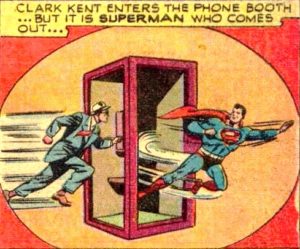
character’s broken leg is a diegetic injury, but losing their hit points is not."  I've always been a fan of diagetic character growth as opposed to non-diegetic.  Non-diegetic, to tie in to a post I made last week, is like Clark Kent dashing into a nearby phone booth and then bursting out as Superman.  Characters go into a battle at second level, kill a kobold or two and emerge as third level.  More hit points.  More spells.  More abilities.  I've always HATED that.  Imagine going to high school, sitting in classes for four year, but not acquiring any knowledge or skills until the end when they hand you a rolled up piece of paper.  Makes no sense.  

So what's the solution?  My return to the game has allowed me to read a crap-ton and keep my eye out for potential solutions.  Some are simply procedural.  I've become more aware of my spell-casters needs and manage to seen spells, books and scrolls in advance of  a PC being able to use them.  In our last session I knew that three PC's were QUITE close to getting the XPs they'd need to go from 1st to 2nd.  So I kept one eye on the XPs they earned and when they crossed the threshold, in media res, their class features manifested.  The Twilight Cleric was bathed in twilight and those around him felt relief, their fear was allayed and some gained hp.  The Circle of Spores Druid manifested her Halo of Spores and inflicted necrotic damage on her opponent.  Made for a nice cinematic moment.  All at the table loved it.  And they'll get the rest of the rights and appurtenances thereto between sessions. But still only a very small band-aid on a much larger "problem."  I do have two potential fixes, however.

Regular readers know I've abandoned feats and instead use the Smolensk Sage System.  When a PC advances a level there are rolls for each area of study to see what, if any, knowledge is obtained.  And it's all applied at once.  A player might acquire a handful of new skills all at once.  Or nothing.  So I'm going to try a little play test this next level.  I'll do all the rolls in advance, note the result and total the outcome.  Then as players advance toward the next level after each session I'll allocate the points randomly.  So instead of dashing into the phone booth after a successful interaction with the head of the cartographer's guild the abilities can be acquired a little at a time and introduced between sessions.  That way every XP counts, not just the last one.  You never know when some new skill/feat is going to fall into your lap so long as you are progressing.  

And the OTHER mechanic I recently stumbled on, via the above-linked post, is that of Ability Score improvements.  RAW you go adventuring and when you wake up at 4th level you're suddenly better at two of the six things you can do.  Whether you've used it or not.  Makes no sense.    I've been playing Sid Meyer's Civilization since Civ 1.  Unit's get promotion but you decide what they are.  Scouts are the first unit's you get.  When promoted they can get either a movement bonus through forests or over rough terrain.  In other words you can spend every turn marching over hilly rough terrain earning exploration XP but when you get your promotion you can improve your forest movement.  Makes no sense.  

So let's steal a mechanic from Freebooters on the Frontier (2.)  Any time the player tries to do something using one of the six abilities and fails they get a tic.  Five tics and they increase the AS by 1.  OK.  Not EVERY time.  A nat 1 is a critical failure and nothing good come from that.  But a 2?  That earns a tic.  Same for failure by 1 (? not sure about this.)  I'll play test and see what happens.  Fighting, casting and skill uses all count.  There's a 10% chance of getting a tic so the fifth tick should come after roughly fifty tries.  Assume a fighter.  Most of our combats are successfully resolved in 3-5 rounds.  So 10-15 combats.  RAW bumps the AS every four levels.  That would break down to 3-4 combats per level.  Spellcasters likely have fewer chances but should have more opportunities using other skills.  And this way there's no dashing into the phone booth.  There's merely a nice step of progress for using your abilities - the high AND the low.  

Would love to hear thoughts and input.  And I'm wondering: do I tell the players or just let them find out as they get the boost?


Tuesday, January 9, 2024

In which we roll for initiative.

Have I done this before?  Feels like I've done this before.  The last 7-10 days I've seen a handful of YT's
about this topic and read at least double that in blog posts.  "Initiative is broken.  Here's how to fix it."   IMHO Initiative RAW is NOT broken (even though we don't use it.)  Execution is broken.  Implementation is broken.  But the rule itself is reasonable sound.  All of the "team initiative," "go in order around the table,"  "popcorn," etc. will NOT "fix the problem."

Quick recap:  I'm old.  There were only 48 US states when I was born.  I began playing the 1977 or 78.  Stopped in the mid-80's.  Picked up again about five years ago.  Missed out on 2, 3.5 and 4 but I'm familiar with the rule sets.  And here's the thing - I'm also COMPUTER LITERATE.  And I do NOT understand why more DM's do NOT use a computer to assist running their game.  I'm not talking about on-line players (although in many cases, yes, them too.)  

The idea is to reduce the time spent on simple, repetitive, mundane tasks that detract from player (and DM) enjoyment.  The tabulating and collating of initiative order is a GOLDEN example of this.  No matter what fancy named system you're using at your table it could probably be faster with the use of a laptop to hand basic repetitive computation and collation.

I implemented this procedure three years ago, players love it and I've never had a problem.  It's allowed me to keep a brisk pace during combat while keeping the players involved.  It is VERY adaptable to whatever style of initiative you prefer.  And I'm gonna give it to you free, gratis for the mere price of your continued love, affection and admiration.

Let's start with a bit of background about the homebrew that I manage to run via this sheet.  Hopefully the benefits will be obvious.   We roll initiative every round.  Players roll 3d6 and apply their initiative factor.  Takes seconds.  If they have advantage they roll 4d6b and drop the lowest.  Now to the spreadsheet. Column 1 lists the characters in no particular order.  Further down the column I list (as part of my game prep) the creatures they'll likely be encountering.  I also keep brown bear stats handy because they can stand in for a LOT of things.  Column 2 I enter the players results.  Opponent results are generated by the sheet.  I then apply any encumbrance penalty (because we USE encumbrance rules.)  So now I have a column of numbers generally ranging from 3 to 18, tailored and matched to everyone in the encounter.  

Nothing surprising there.  Any DM might do that.  Simple.  But the NEXT step is where the magic happens.  I apply a little conditional formatting to those numbers.  Whoever goes next is highlighted in green with those on deck in yellow.  When combat hits I can open with "Jutoris, you go first.  Kharkon is next."  Party knows that I don't tell them who's next, it's a critter.  

NOW is where it get's spicy.  Everything that the might do has a cost.  Daggers are fast.  Crossbows are slow.  Etc.  And you can't do everything at once.  So let's say Jutoris goes first.  He does his thing (be it moving, casting, or any other action.)  The cost of that thing goes in column 3.  Column 2 reflects that cost and the number goes down.  The conditional formatting then changes Kharkon to green (next) and whatever initiative is next to yellow.  I'll describe Jutorus' action/outcome, mention which player is on deck (if one IS) and then proceed to Kharkon.  Jutorus is NOT done and doesn't know when he will be up next. All players have to maintain focus on the situation because they aren't sure when they'll be called upon to act.  Lather, rinse, repeat.

We do more but for the purpose of THIS post that's all that matters.  Once everyone has done all of their things in the action economy we re-roll and fire it up again.  Easy peasy lemon squeezy.  Player involvement and agency.  Cinematic action resolution.  Quicker combat.  And crunchy rule implementation.     

Thursday, January 4, 2024

In which we playtest

 Welcome to 2024.


First session of the year went pretty well.  The relief column was played quickly with some nice flavor.  Our ranger who began as a bombastic embellisher has caught a lot of flak from our high elf fighter.  This column is partly mounted and our three heroes have been given horses for the task.  Only the ranger HAS horsemanship as a skill.  The wizard wisely led her animal or allowed it to be led but the steed of the haughty fighter kept wandering off the trail and onto the side of the road to graze, only to be retrieved by the ranger, who is now leading her like a kids pony ride.  Sweet.

Meanwhile back at the keep the newbies spent an hour trying to figure out how to get a lit torch through an arrow slit without being seen.  Was a GREAT example of the adage "when all you have is a hammer everything looks like a nail."  They insisted on trying to physically relocating the torch then lighting it with magic (fire bolt.)  Eventually they realized they could LIGHT it first (with their tinder box) then transport it via Mage Hand.  Even then it didn't work as the bandits merely threw it back out, but it killed a fun hour.

So what got playtested?  I'm using the Open Multiple Files app again, which was helpful.  My magic and encumbrance sheet came in handy.  And I'm still learning the in's and out's of my own combat sheet and improving it's use.  Unbeknownst to the party I've been using Tracy & Curtis Hickman's combat damage table from XDM.  Mooks were going down with relative ease until the player rolled max damage but the table only gave them 50%.  They were shocked and panicked and they realized they were facing "Mongo" and not EVERY bandit was a pushover.  Nice moment.  The Players/DMs Handbooks I assembled worked as designed as well.

Which bring us to Nimble.  LOTS of good ideas but many aren't worth the walk: the solutions they offer to several problems are no more elegant than the problem they solve AND they're a step to far in some instances.  Attacking is FAR too simplified. Exhaustion is what many tables are already using.  Dying rules are too forgiving.  Our resting rules are better but they do have some interesting mechanics to use on the backside.  Mana is nice but our current spell slot system is "better."  And by better I mean my players like it, have bought into it and I don't wanna throw ANOTHER system at them.  

But their brew for Action Points is simple, elegant, makes sense, provides more player agency and got pretty quick buy in from my players.  Instead of move, action, bonus action and reaction you get three (or more) Action Points.  Almost everything costs 1 AP.  Exceptions are leveled spells that take 1 action to cast, which cost 2 AP, and special abilities or features that allow bonus actions (eg. step of the wind, action flurry) cost 0 and may only be done once per round.  Doing anything a second or third time adds stacking disadvantage (so you COULD attack three times but the second would be 2d20 and the third would be 3d20.)  The exception to THIS is ST spells.  The target would instead get advantage on the ST.  Done.  Almost.  High WIS gives a bonus to the #of AP's you have in the first round, improving not how EARLY you act but rather how OFTEN.  Might peel this one off.

And there's some "heroic" stuff as well.  PC may use 1 AP to block (reduce damage by your AC modifier.)  Opportunity attacks are now made at disadvantage and mooks don't have them.  Should make the battle field a little more fluid.  Also added a called shot critical.  On any attack you decide what a critical hit is (up to +10) (rolled with disadvantage) but a critical miss becomes just as big.  Essentially you can take a 50/50 shot with amplified failure.  This one needs more work.

 So how did all of this go in actual play?  Meh.  I had three casters fighting bowmen at range most of the time so a lot of this stuff didn't matter.  Until members of the party got close to 0 hp.  Blocking prevented a death.  There was a discussion while the party was pinned down about using the Called Shot Crit and the more I've thought about it the more I don't like it.  But here's a fix.  You can still do it BUT it's limited to 1 point (5%) per level AND there's a critical miss with multiple effects (ie roll twice on the critical hit table and double the results .... or triple .... etc.) 

A good session but further testing needed for the AP change.  AND the Called Shot Critical. 

<edit 1/12 to add> also got a chance to use "our new" fumble table.  Druid defending a section of keep wall.  Lizardfolk breeched the wall and melee ensued.  Druid Nat1's her first attack.  Rolled a 6 for a CHA ST - her penultimate state.  Failed ... and the free attack misses.  Was quite dramatic.  Player actually insisted on acting out her botched feint.  And the party agreed this (so far) was a GREAT mechanic!

Sunday, November 19, 2023

In which we return and ask a big question.

 No show.  At least for me anyway.  Auditions left us half a dozen actors short.  Board beat the bushes and found me a few more but not enough.  I'm not willing to just take whatever wanders in and try to make it work.  So I resigned.  So be it.  Moving on.

When I have game time off I use what WAS prep time to update me trade tables and explore new mechanics.  I I find something I bounce it off the table and then we either adopt it immediately, reject it immediately or play test it for a month.  It was doing some of this exploration that the question popped into my head: at what point does D&D stop being D&D? I've tinkered with home brew and added mechanics for things the game rules (RAW) seem to hand-wave away. Am I still playing D&D?

I reached out to my DM Brain Trust and they offered “when you can no longer drop a character sheet/monster stat block/item from the system without a great deal of rework.” Which isn't bad.  But I'm not sure that's the line.  So I asked ChatGPT.  The crux of its response was "As long as the core elements of storytelling, role-playing, and the collaborative nature of the game are present, you can consider it a form of Dungeons & Dragons." Definitely don't agree with that, but perhaps it could be combined with the brain trust answer to move us closer.  I've floated this question to at least one other prominent DM and await their input.

I've done away with spell slots and components to "clean up" magic use while still imposing costs and decisions.  Use a modified initiative system which the table really likes.  And I'm giving serious consideration to tinkering with the action economy as suggested by The Dungeon Coach and others.   But with every step I wonder if I've take a bridge to far (from the RAW?)

If you're one of the few, the proud, the ones who actually wander by here and read this stuff I'd appreciate your input!

Wednesday, October 18, 2023

In which we Enjoy the Funnel cakes!

 It went well.  Settled on the Crypt of Endless Agony (#681 from Elven Tower.)  Did a quick introduction of the characters.  Players started getting vested.  Then they entered the dungeon, encountered a ghoul and the slaughter began.  Shoulda been a two-round win but John kept rolling single digit attacks so it was an early bloodbath.  Set the tone.  

The players then settled in, absorbed the stats, possessions and prior occupation.  Range weapons were used as were makeshift range weapons (apples?!)  Some traps detected, some not.  Turning undead attempted - and failed spectacularly.  Slowly but surely the players did what they do best - gelled as a team.  And the BBG was vanquished and the dungeon was escaped and much coin and treasure was carted out.

Many (several?) fun stories were recounted and then the serious work of character creation began.  Roll 6d6 in order.  1-3 give +1 to the ability, 4-6 gives +2.  I also allowed players to swap one high for a low.  Also kept the requirement that an exceptional total must exist for at least two stats, with one being at least 15 and the other being at least 16. It’s enough if a player has one gifted stat, a minimum of 17, instead. Kris's charlatan had some crappy numbers but we bumped the two highest to meet the standard and she was good to go.  

John is already well on his way with Jutorious Bottomflagon his half orc wizard.  Kris's former charlatan is leaning toward rogue and I'm thinking would make a good Mastermind.  Charles?  Leaning toward druid or may take cleric.  Either way he'll be an asset to the party.  Not much muscle here but a lot of everything else.  I've run John through the background generator and it's provided several interesting backstory questions.  He had a fraternal twin die at 6.  How?  He has advantage vs poison.  Why?  He was given two potions.  One healing.  The other is his choice, as is who gave it to him and why.  He was "assigned" his three cantrips but selected one in the funnel.  His spellbook also has Magic Missile and he'll select the other one.  Will be interesting to see how he interacts with Dakora.  

Equipment?  Basic needs, PLUS the stuff picked up in the funnel, PLUS a 3d6 die roll here.

A nice inscription in the spell book - a gift from his mentor (provided by ChatGPS).  And John's well on his way.  I use my mechanics to make a good fit.  John gets a crap-ton of choices and meaningful questions to direct his backstory.  One down.  Two to go!


Friday, October 13, 2023

In which we partake of Funnel Cakes!

Things I dig: DCC Funnels — Maitreyi Plays Games 

Party is about to be all 5th level at which point they have some options.  They may retire the character completely (making them a major NPC in the area, settling down and still giving the character some limited involvement,) kill them off completely, or roll another character to be a follower (and a fallback if the more advanced character dies.)  Been running a version of this the last few years and the party seems to enjoy it.  They even started talking about it when they hit 4th, knowing it was around the corner.

In the past we simply rolled the character up as usual and introduced them via story lines and plot hooks.  Gonna try something different this time, with full buy-in from the party.  A funnel, as popularized (?) by the good folks at Goodman Games who gave us Dungeon Crawl Classics, with some additional bells and whistles.  I've spent the last few days reading available professional products and trying my hand at developing one or two.  Still not sure which I'll use but it's gotta be GOOD because I want it to be a hit.  

Going to use HanClinto's generator to crank out 25 or so PCs.  I'll have 3-4 players and am thinking 4-5 PC's per.  Should have a few left over to fill in as needed.  Looking fwd to my players getting creative with the limited inventory provided.  Also using an optional rule from Ten Red Crows to allow PC's with INT or WIS of 15 or greater to gain the ability to cast the Uninitiated Magic cantrip.  Because the characters are at level 0, the spell attack modifier will be only the ability score modifier to which the
magic is tied: no proficiency bonus is allowed.  They can create a small glowing bolt of energy and hurl it at their enemies. Make a ranged spell attack. On a hit they'll do 1d4 force damage.

AFTER the funnel the player will take one of their survivors and promote them to a Level 1 character.  They'll roll 1d6 for each ability and increase that ability by either 1 (1-3) or 2 (4-6.)  Skills, proficiencies, languages and equipment will be determined similar to our initial character build.  Giving serious consideration to using these tables to see what happens.  Since I'll be doing this away from table I can probably experiment to see which give us what I think is the best build.  Hopefully the players will rely on the funnel to lean into their backstories.

As an aside I have an interesting plan for introducing the noobs to the party.  I'll post if it works.

Thursday, September 28, 2023

In which we get dressed

 OK, y'all know I like some picky grit (grit pickin'?) in my game.  And weather.  And economics.  And that my econ system is being reworked.  So I finally got around to updating my textiles, cloth and clothing production.  Alexis has over a dozen posts on clothing (sadly no longer with comments, some of which were quite helpful.)  And I had begun the task of meshing the clothes and weather systems but several steps remained undone.

No longer.

Weather.  Every population area has a weather system based on latitude, altitude and biome.  This spits out a daily temp range, precipitation, condition and wind speed.  The temp ranges are broken into 10 degree steps and each "step" has a clothing "requirement."

Clothing.  The two prime concerns are thickness and weight.  It takes about 4.5 pounds of material to provide basic coverage.  Every 1.5 pounds provides an additional 10 degrees of "warmth."  When it's pleasant the 4.5 mark is sufficient.  As it gets warmer or colder the party needs to increase/decrease what they're wearing.

An outfit of common clothes (homespun hemp) weighs in at 4.6 pounds and covers the basics.  Traveling clothes are made of linen which is not as heavy material but is made thicker, so 10 pounds which means it's good down another 35 degrees!  Wool socks.  Great hooded cloak.  Mittens.  Now you're getting down below freezing.   It's late spring though and heat is getting to be a factor.  Common clothes.  But even then a failed CON save can result in exhaustion, and that adds up.  And wearing ARMOR while traipsing around the countryside just adds to the problem!  Leather armor adds 8# right off the bat!  

So now part of my session prep will include evaluation clothing/armor worn as it relates to upcoming weather so I can advise the party of the choices they'll need to make.   And choices make the game!


Wednesday, September 13, 2023

In Which We Cobble Together a Frankenventure

 Here then, with links to almost all the tools used, I how I assembled the parties current little decampment.  A few months back they observed that there wasn't enough going on during overland travel.  "Aside from the two caravans a day you met and allowed to roll placidly on by?  How many plot hooks you think each of 'em was carryin'?"

But they did have a bit of a point.  My random encounter tables weren't enough to support the massive undertaking.  So let's go the hexcrawl route.  Fill those random hexes with temples and caves and mysteries.  So I turned to the good folks at Infinium Game Studio and their Hexcrawl Toolkit.  Allowed me to quickly populate the area surrounding the journey.  Done with step 1.

So I ended up with, among other things, a small settlement thorp north of the next settlement.  The BASE of the current campaign is 700 Lordly Houses from Worldspinner.   Every populated area is under the control of SOME lordly house and I'd already plopped House Willow into the thorp.  It has a couple built in story lines but nothing I wanted to activate just yet. The larger area is run by House Ferrante who control most of the iron production in the region.  Seems like they'd be in conflict.  So much for Step 2.

Next we dial up ChatGPT. A handful of prompts later and we had a mystical hill topped by a temple over which the two families fight.  These then are the ChatGPT results I capitalized on:  "Atop the hill, a shrine dedicated to a deity associated with craftsmanship and cosmic balance stands as a testament to the hill's significance. Both families lay claim to the shrine, each interpreting its significance differently. The Ironhearts see the deity as a protector of their craft, while the Stellarglades believe the deity's presence embodies the cosmic harmony they venerate.  Artifacts of Unity: The shrine holds a set of artifacts that, when reunited, have the power to mend the rift between the families and restore the hill's harmony.  My imagination then created the Anvil of Unity, the Heart of Iron (exactly what it sounds like) and the Willow Nexus (a marble representation of a willow tree.)  Step 3 completed.

Didn't wanna make this TOO hard.  The Lady of House Willow entreated the party to locate and return the two missing artifacts.  A visit to the temple revealed clues.  The phrase "as below, so above" was linked to the Heart of Iron, and the willow was linked to The Eternal Garden", about whom the party had heard rumors (quite simply as filler conversation at a tavern.)  Elven Tower had recently released Corvinus Family Crypt.  Change the name, shove that puppy under the temple, give the Heart of Iron to the BBG.  Voila.  Half done!  And this is as far as has been played.  I DID use the Underclock to decent effect.  The Shadowing Event hit a VERY good time for the narrative but the actual encounter turned out to be a tad ... anticlimactic.  Not every one can be a home run.

The party spent the rest of the day at the temple in a driving rain.  A short rest for a reasonable recovery.  The PLAN is to go back to Weshesony, do a little research (which will likely consist of asking some randome passer-by what the know about the Eternal Garden) followed by the trip TO the EG.  

The aforementioned Hexcrawl Toolkit suggests using their random dungeon generator to assemble the garden pathways.  Didn't appeal to me.  So I thought I'd turn to a tool that has stood me in good stead on several occasions and lends itself to the concept of this shifting malevolent garden:  Carapace from The Goblin's Henchman.

So I'll put together a RE table, escalating as the party gets closer to the goal.  Modify the rules just a tad, use the Underclock, rolling at each hex ... incorporating ALL of the stuff.  The Willow is at the "center" of the complex, so it's a "get in and get out" as quickly as possible.  The party can find clues to ease their task either in town or within the Garden.  

Once BOTH items are returned to their rightful place in the temple the families negotiate an accord which improves both.  The party is rewarded  with some interesting stuff via The DM Lair which presents a slew of interesting alternatives to the old "gold and magic items" tropes. In this case they've been wanting a way to ease/speed travel.  A pony, 2-wheeled cart and harness are bestowed.  This stuff is worth about 3-400 gp here.  The Ranger can handle the cart and pony.   Six resources?  Seven?  All knit together to make a VERY nice three session adventure.

Saturday, September 9, 2023

In Which We Munch on Crunch

 Recently started reading the posts from A Knight at the Opera.  They've had a couple pretty good posts on crunch lately.  Well, not lately.  This one was back in 2021And this one last month.  Both of reasonable length but both good treatments of the topic.  

Y'all know I likes me some crunch.  But I like crunch for a reason.  And I like crunch on MY side of the screen.  Player facing crunch adds to the cognitive load and detracts from overall game play.  So if I add a bit of crunch for the players it's gotta be worth the walk.*  If I can add it to MY work load and it improves the game then I'm usually not even gonna question it.  Players don't usually even hafta know it's there!

And so it is with my newest concoction.  A year or so ago I experimented with The Angry GM's Tension Pool.  It worked OK but we weren't spending enough time crawling for it to matter so it slipped silently into thecloud of good intentions.  Then last month I discovered The Underclock.  And THIS I will implement.  Started last week.  As the party entered the dungeon I meticulously placed a d20 on the map with the "20" facing up.  All action ceased.  Dakora gave me the side-eye and said, quietly, "I hate it when you do stuff like that."  They got it down to 14 before the end of the session.  We'll see how Tuesday night goes.  Don't think I like it for overland travel, nor for urban exploring but it has definitely seemed to sharpen up their attention underground.

Pile this on top of my insanity rules,  spell slot rules and focus vs component rules and the crunch is all easy on the players but adds to the gameplay and decision making.  Do I risk madness to get this spell off?  Do I upcast a spell at the risk of losing it for 24 hours or more?  Do we keep making progress or fall back to that nice spot on the trail that offered the promise of a long rest (which is quite a commodity in our game.)  Cheese that CRunch!

Side story from last session.  Party is trying to elicit help from a local noble.  Their selling point was "we like to travel village to village doing good deeds."  The Lady inquired "what was your last one?"  What followed was about two minutes of backtracking through previous of adventures, NONE of which really involved "good deeds."

*Lengthy aside.  Back when I worked as a summer camp counselor I was usually in charge of our "special programing": opening and closing ceremonies, vespers, flag raising and lowering.  That kind of thing.  I enjoyed finding alternative sights for these.  And our campers usually appreciated the variety IF it made sense.  Had an aide once recommend using a sight that was a 15 minute walk from our home base.  For a five minute ceremony.  I nixed it and said the location had to be "worth the walk."  It had to be worth the half hour of evening rec time the campers would be giving up to get there.  And after that "making it worth the walk" became sort of our mantra.

Sunday, August 27, 2023

In which we randomly encounter ... stuff.

 I've never been a fan of so-called "random encounters."  Other people's tables never seemed to fit.  Timing was awkward.  They could be disruptive.  A LOT of that was just my weakness as a DM.  So I limited my usage of them.  I'm finally getting them cleaned up and functional in my wilderness travel to the point where they actually add to the adventure.  But my dungeon crawl "game" isn't there yet.

A few years ago I tried to implement Angry GM's tension pool.  TLDNR:    Take one small
bowl and six d6.  Add a die to the bowl every time the party takes a 'time consuming action.'  When the players do something reckless OR the sixth die goes in, roll the pool. If there's a "1" there's a "complication."  Worked OK.  Players noticed when a d6 got added.  It contributed to the tension.  But I never got the hang of it so it slipped away.

But today I was wowed by a "new" mechanic from Goblin Punch:  The Underclock.  TLDNR:  Set a counter to 20.  Roll a d6 whenever the players "take time."  Reduce the 20 by the amount of the roll.  When it goes below 0: Encounter.  There's more and I think I'm gonna implement it at my table this week to see how it goes.

So here's what provokes a roll:  exploring a new area, passing through 3 explored areas, multiple skill checks in the same area, making noise, and taking a short rest.  If the counter goes BELOW 0: encounter.  If it goes to 0 exactly there's a shadowing event and it resets to 3.  If it lands on 3 exactly there's a shadowing event.  The link about provides a lot of the math.  

Goblin Punch suggests exploding dice on the rolls and increasing the size of the dice after a rest (reflecting increased attention.)  I'm rarely crazy about exploding dice but I like the increasing size thing.  So Imma combine them.  I'll start with a d4.  Roll max amount the there's a step up AND a reroll.  Also an increase after a rest.  

So there it is.  Not sure when this party goes underground again but this gets thrown into the mix at the soonest opportunity.


Saturday, August 5, 2023

In which the DM smiles

     Our last session was roughly the 10th in the new campaign.  Party had decided to hit the road.  After exploring a mysterious keep, with the aid of a mysterious stranger, they headed for "the crossroads," a caravanserai.  There they were hired as night watchmen to try to catch/kill an unidentified "monster in the woods."  I thought this was a one-night adventure but it turned into three.  PART of that is because 80% of us play in the same FFL and it's a busy time of year so a LOT of off-topic convos.  But still!  

    The OTHER reason it took so long was because of player agency.  On several occasions throughout the story they reached decision points and took .... creative paths.  They DID uncover the monster, reveal the twist, bring the true miscreants "to justice."  And then left town.  Had they been able to tie the wrong-doers to their higher-up the caravanserai would've rewarded them with a pony and a wagon - something they can definitely use and have been asking about (and can only just barely afford.)  <edit to add> I would note that there was some questionable writing in the otherwise good product I pulled the adventure from.  Too much RR and not enough SB.  Thankfully The Alexandrian has taught me well about the three clue rule, so I was able to "add" undiscovered clues in a couple more areas to smooth the road.  Better writing could have eliminated this necessity.   

    So why the smile?  At the session conclusion there was MUCH discussion over their new-found freedom and agency.  There was SOME last campaign but this time around I've listened, forced myself not to over-plot, and let them go.  They THINK they're being naughty murder hobos.  They DID kill two people on the way into the first village and the rest of the Night Watch given the opportunity.  In reality, ALL of the death sentences were meted out to the local equivalent of the Thieves Guild, unbeknownst to our heroes.  So THEY think they've been given a crap-ton of agency (which they have) and I've been able to to run fronts, short form adventures and random encounters that meet their needs.   There's a blighted forest spreading.  There's a green dragon keeping an eye on them.  They're learning of the Noble Houses which run the realm (and learning that perhaps there ARE no good guys.)  

    Also on the up-side I'm incorporating some of the journey techniques from Adventures in Middle Earth and using the hex crawl techniques from the good folks at Infinium to improve long travel and exploration.  "Lonely fun" as we used to call it.  And we're gonna try to bring back Skill Challenges from 4e!  ChatGPT is your FRIEND!  I'm currently using it to generate NPC's (using the GreatGameMaster's OGAS technique,) fix formula problems in my extensive spreadsheets, design the aforementioned Skill Challenges, select actions and grim portents for Fronts, write short adventures(!), and management of climate and weather. 

    On the DOWN side my hand has been forced on upgrading to NTME23.  I moved all three base files into the same folder and instantly fouled up/destroyed all of the links.  Think I have enough into to run Tuesday's session but there will be some intensive work to get it all reconnected.  ONE document.  Some new raw materials.  Storefront calculator incorporated.  Manufacturing pages cleaned up to be made a bit more uniform.  And an attempt at an "easily" updatable shopping list.

Thursday, July 13, 2023

In which we try to catch some shut-eye.

 Not gonna add this to my current campaign but you can bet it'll be part of the NEXT one!

Per Xanthar's: 

Sleeping in light armor has no adverse effect on the wearer, but sleeping in medium or heavy armor makes it difficult to recover fully during a long rest.

When you finish a long rest during which you slept in medium or heavy armor, you regain only one quarter of your spent Hit Dice (minimum of one die). If you have any levels of exhaustion, the rest doesn’t reduce your exhaustion level.

OK.  So we'll use this.  Gotta skin outta that medium/heavy armor to get the full benefit of a long rest.  FWIW Elves don't sleep.  They trance, so no effect.  Game-wise it makes those late-night surprise attacks a little more troublesome.  As a player just make it the rule that if you're exhausted and/or have lost more than 1 HD of damage, you need to be comfy! 

So what if you DON'T get a long rest?  I'm a bit skint when it comes to allowing them, so this might be hard on my parties.  I'll need to be aware of this.  IF you go 24 hours without a long rest you need to make a CON check at DC 10 or take a level of exhaustion.  The DC increases by 5 every additional 24 hours.  Result:  going 24 hours is doable.  Making that first roll isn't bad.  But when you go 48 the DC is 15.  Fail THAT and you take a lvl of exhaustion so the NEXT roll (72 hours) is at DC 20 and -1.  Now you're in a death spiral.  Four days is at DC 25 and likely -2.

Some nice plot points can come out of this.  The elf in the party scurrying to find a suitable resting place (!?) for the fragile humans, etc.  Perhaps the exhaustion from lack of sleep doesn't lead to death but rather a coma-like state.  Out for 24 hours under any circumstances reduces exhaustion by 1 lvl, alowing the struggle to continue